Stunning Acrylic Modern Chandelier Lights

Acrylic chandeliers represent a contemporary evolution in lighting design, offering an alternative to traditional crystal fixtures. These lights utilize acrylic, a thermoplastic polymer also known as Plexiglas or Lucite, to refract and diffuse light. The material’s properties, including its clarity, durability, and malleability, have allowed designers to create a diverse range of modern aesthetic forms. Unlike glass or crystal, acrylic is significantly lighter and less fragile, simplifying installation and reducing safety concerns in certain applications. This article explores the characteristics, applications, and considerations associated with acrylic modern chandelier lights.
Material Properties and Manufacturing
Acrylic, formally polymethyl methacrylate (PMMA), is a synthetic polymer renowned for its transparency and resistance to shattering. Its optical clarity, often exceeding that of glass, contributes to efficient light Ozojo transmission. The material’s density is approximately half that of glass, resulting in lighter fixtures.
Composition and Variants
Standard acrylic is derived from methyl methacrylate monomer. Chemical variations and additives can alter its properties, including UV resistance, impact strength, and color. For chandeliers, optically clear grades are most common, though frosted or tinted acrylics are also used for specific decorative effects.
Fabrication Techniques
The versatility of acrylic allows for various manufacturing processes, shaping intricate forms characteristic of modern chandelier designs.
Laser Cutting
This method uses a focused laser beam to precisely cut intricate patterns and shapes from acrylic sheets. It enables high levels of detail and repeatability, crucial for creating complex geometric designs or individual decorative elements.
Thermoforming
Acrylic sheets can be heated to a pliable state and then formed over molds, allowing for the creation of curved, sculptural, or three-dimensional components. This technique is often employed for organic or flowing designs.
Injection Molding
For mass production of identical components, acrylic pellets are melted and injected into molds. This process is efficient for creating intricate or repeated elements found in some chandelier designs, ensuring consistency across multiple units.
Polishing and Finishing
After fabrication, acrylic components often undergo polishing to remove edge imperfections and enhance their clarity and luster. This step is critical for maximizing light refraction and reflection within the fixture.
Design Principles and Aesthetic Integration
Modern acrylic chandeliers often deviate from traditional ornate designs, embracing minimalism, geometric forms, and abstract expressions. The material’s properties facilitate innovative approaches to light diffusion and visual impact.
Geometric Abstraction
Many designs feature clean lines, sharp angles, and repeating geometric shapes. Cubes, spheres, rings, and interlocking polygons are common elements, creating a sense of order and contemporary elegance. These designs often leverage the material’s ability to be cut precisely.
Organic and Sculptural Forms
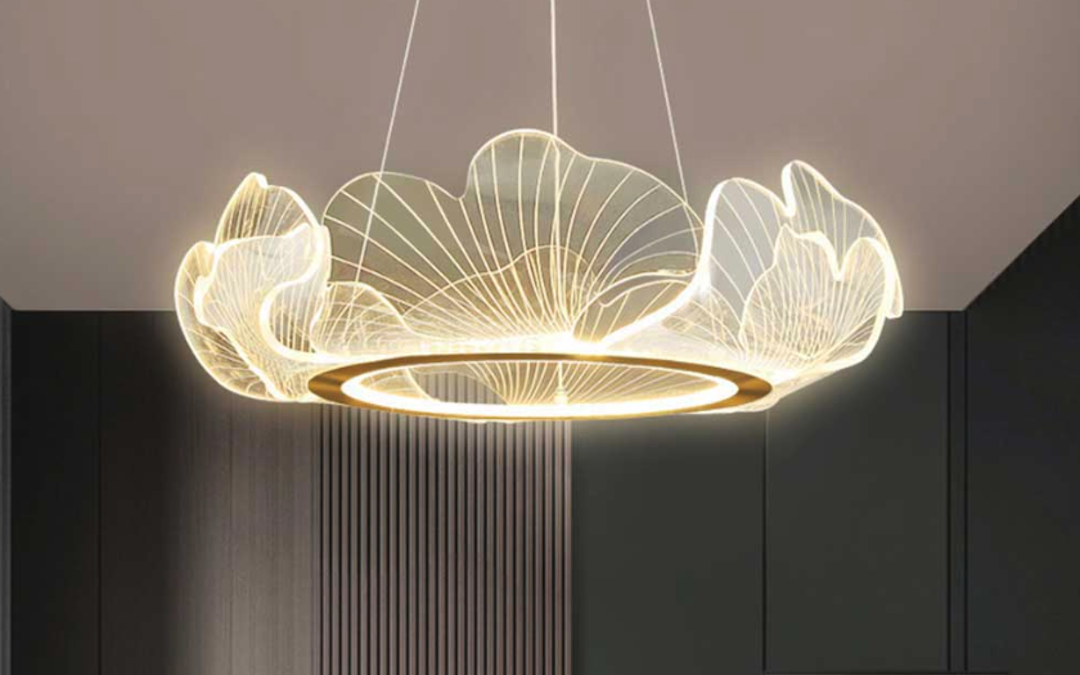
Beyond geometric precision, acrylic’s thermoforming capabilities enable the creation of fluid, wave-like, or abstract sculptural forms. These designs can evoke natural elements or pure artistic expression, often acting as a focal point in a space. Consider the metaphor of a frozen ripple in water, capturing light in its undulations.
Minimalist Approaches
Some acrylic chandeliers adopt a minimalist aesthetic, focusing on essential forms and discreet integration of light sources. These designs often prioritize function and understated elegance, allowing the light itself to be the primary design element rather than elaborate ornamentation.
Integrated Lighting Technology
Modern acrylic chandeliers frequently incorporate LED technology. The small size and efficiency of LEDs allow for their seamless integration within acrylic elements, creating uniform illumination or dynamic lighting effects. This synergy between material and light source is fundamental to contemporary design.
Functional Advantages and Considerations
The use of acrylic in chandeliers offers several practical benefits compared to traditional materials, alongside specific considerations for selection and maintenance.
Durability and Safety
Acrylic is considerably more resistant to impact than glass, making these fixtures less prone to breakage during shipping, installation, or in environments where accidental contact is possible. This inherent shatter resistance enhances safety, particularly in public spaces or homes with children.
Lightweight Construction
Compared to glass or crystal, acrylic chandeliers are significantly lighter. This reduces the structural load on ceilings, simplifying installation requirements and broadening the range of suitable mounting locations. It also contributes to reduced shipping costs and ease of handling.
Optical Performance
High-quality acrylic can transmit up to 92% of visible light, often surpassing that of standard glass. Its optical clarity, combined with design nuances, allows for effective light diffusion and refraction, creating visual sparkle akin to traditional crystal, but with a different inherent quality. The light passing through acrylic can be compared to water through a prism, bending and scattering.
Maintenance and Cleaning
Acrylic surfaces are generally smooth and non-porous, making them easy to clean with mild detergents and soft cloths. However, it is crucial to avoid abrasive cleaners or harsh chemicals, as these can scratch or dull the surface, diminishing its clarity over time. Regular, gentle cleaning is recommended to maintain optical performance.
UV Resistance Considerations
While some grades of acrylic offer enhanced UV resistance, prolonged exposure to direct sunlight can, over many years, lead to yellowing or degradation in standard acrylics. For fixtures in sun-drenched locations, inquiring about UV-stabilized acrylic is advisable.
Installation and Placement Guidelines
Proper installation and strategic placement are crucial for maximizing the aesthetic and functional impact of an acrylic modern chandelier.
Ceiling Support Requirements
Due to their lighter weight, acrylic chandeliers generally require less robust ceiling support than comparable glass or crystal fixtures. However, it is essential to always adhere to the manufacturer’s specific weight and installation guidelines. A secure junction box and appropriate mounting hardware are fundamental.
Height and Clearance
The ideal hanging height for a chandelier depends on its location. Over a dining table, the bottom of the fixture should typically be 30-36 inches (76-91 cm) above the table surface, allowing for clear sightlines and adequate task lighting. In open areas with high ceilings, the bottom of the chandelier should generally be at least 7 feet (2.1 meters) above the floor to avoid obstruction for taller individuals. Consider the space below the fixture as a stage, and the light as its illuminating centerpiece.
Room Scale and Proportion
The size of the chandelier should be proportionate to the room. A common rule of thumb for circular rooms is to add the room’s length and width in feet, and use that sum as the approximate diameter of the chandelier in inches. For a rectangular room, consider the room’s longest dimension to guide the chandelier’s scale. An oversized fixture can overwhelm a small space, while an undersized one may appear insignificant in a large area.
Strategic Placement for Visual Impact
Placement should consider both ambient lighting and the chandelier’s role as a decorative element. Chandeliers often serve as a focal point in entryways, living rooms, and dining areas. Positioning them centrally or above key furniture arrangements maximizes their visual effect. Consider how the light interacts with architectural features and other decorative elements in the room.
Trends and Future Developments
The field of modern lighting is dynamic, and acrylic chandeliers continue to evolve, integrating new technologies and design philosophies.
Smart Lighting Integration
The integration of smart lighting systems is becoming increasingly prevalent. Acrylic chandeliers equipped with tunable white light capabilities allow users to adjust color temperature, from warm to cool, to suit different moods or times of day. RGBW LEDs offer a full spectrum of colors, controlled via smartphone apps or voice commands, enabling dynamic and customizable lighting experiences.
Sustainable Practices
As environmental consciousness grows, manufacturers are exploring more sustainable practices. This includes research into recycled or bio-based acrylics, as well as production methods that minimize waste and energy consumption. The inherent durability and long lifespan of acrylic fixtures also contribute to sustainability by reducing the need for frequent replacements.
Parametric Design and Generative Art
Advanced design software now allows for parametric and generative design approaches, enabling the creation of highly complex and unique forms that would be challenging to achieve manually. These digital tools can create intricate patterns and structures, opening new avenues for acrylic chandelier aesthetics, pushing the boundaries of what is visually possible.
Hybrid Material Combinations
Future designs may increasingly incorporate acrylic with other materials such as metal, wood, or stone, creating composite fixtures with varied textures and visual contrasts. This multidisciplinary approach can lead to chandeliers that are not only light sources but also sophisticated pieces of functional art. Imagine acrylic paired with brushed brass, a synergy of transparency and metallic warmth.
Interactive Lighting Experiences
Developments in sensor technology could lead to more interactive acrylic chandeliers that respond to their environment or user input. This might include light patterns that shift with ambient sound, motion sensors that trigger adaptive lighting, or fixtures that integrate with augmented reality experiences, blurring the lines between physical object and digital interface.